
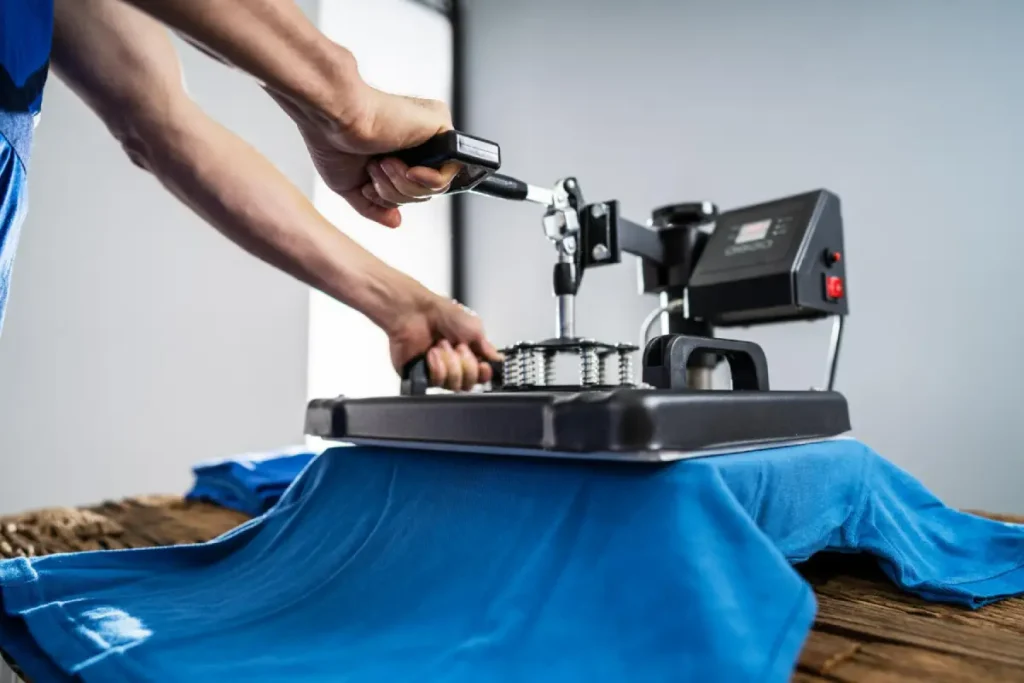
The apparel industry is currently witnessing a massive migration from legacy decorating techniques toward the high-definition capabilities of dtf printing. However, there is a dangerous misconception that the technology itself is a “plug-and-play” solution. For brands aiming to capture the premium market, the differentiator is not the print, but the **Application Integrity**. If you want your merchandise to hold its value in a retail environment, you have to treat every garment you process as a precision engineering project.
The hallmark of a high-margin apparel brand is a print that feels like it’s part of the garment’s structure. When you apply dtf transfers, you aren’t just placing a graphic; you are introducing a temperature-sensitive polymer bond into a textile environment. If you aren’t calculating your “Thermal Budget”—the exact amount of heat and pressure required to fuse your specific adhesive to your specific fiber blend—you are leaving the durability of your product to chance. At Harwin, we advocate for a systemized approach that replaces guesswork with measurable, repeatable data.
The Physics of Fiber Integration
Most print failures occur at the interface of the ink and the textile. Many operators mistakenly think that “hotter is better,” which often leads to scorching or the “crystallization” of the adhesive layer. When adhesive is over-heated, it turns brittle, which is why prints on budget-pressed garments crack after a few weeks. The goal is “Flow-State Adhesion,” where the TPU powder reaches its melting point and moves into the fiber weave, but maintains its elasticity.
We recommend a “Temperature Gradient Study” for your shop. Take a sample of every fabric you carry—100% ring-spun cotton, triblends, recycled polyesters—and press them at 5-degree increments. Document the results until you find the “sweet spot” where the bond is indestructible but the fabric hand-feel remains soft. This level of technical rigor is what justifies the premium price points that luxury streetwear brands command.
Market Velocity: The Power of Localized Production
In the digital age, the most expensive mistake a brand can make is “inventory bloat.” Searching for dtf transfers near me is often framed as a search for local vendors, but it is actually a search for **production velocity**. By partnering with a technically sophisticated regional printer, you can bypass the lag times of national suppliers and transform your business into a “Just-In-Time” (JIT) manufacturing operation.
This agility allows you to drop new collections on a weekly basis, testing consumer demand without the risk of unsold stock. A regional partner who understands Harwin-level standards isn’t just a supplier—they are a collaborator. They can assist in optimizing your artwork for specific finishes—such as matte, metallic, or high-stretch additives—giving you a finished product that looks and feels like it came off a million-dollar production line.
Establishing Institutional Quality Standards
Scalability is impossible if your quality depends on one person’s “feel.” To scale your brand, you must externalize your knowledge into a Standardized Technical Manual. This should document the PSI pressure, dwell timing, and cooling duration for every SKU you offer. When your workflow is codified, you eliminate the variability that leads to waste and customer returns.
Beyond standardization, your audit process should be aggressive. We suggest the “Mechanical Wash Test”: select a production sample and run it through a heavy-duty laundry cycle with high-heat drying. If the graphic shows the slightest signs of fatigue, your process is not yet ready for the premium retail market. When you can consistently prove that your product survives the most rigorous real-world conditions, you earn the right to charge premium prices. That is the fundamental transition from being a “custom shop” to an “apparel label.”
Frequently Asked Questions
Why does “Cold-Peel” matter for long-term stability?
The “Cold-Peel” method allows the chemical bond between the adhesive and the fabric fiber to transition from a liquid to a solid state while under uniform compression. If you peel while hot, you are essentially pulling the adhesive before it has “locked” into the textile structure, creating thousands of microscopic weak points.
How can I achieve consistent pressure across large prints?
Large graphics are prone to pressure loss at the edges due to “platen deflection.” Always center your print and, if your design spans nearly the entire platen, consider using a high-density silicone mat or a “platen cover” to ensure the pressure is applied uniformly across the entire graphic surface.
What is the most effective way to protect heat-sensitive synthetics?
Use a “double-barrier” method. Place a Teflon sheet on both the bottom and top of the garment. This acts as a thermal buffer, slowing the heat transfer just enough to prevent the fabric from glazing or scorching while still allowing enough energy through to melt the transfer adhesive.
How does ink density affect the overall garment comfort?
Excessive white-ink density creates a thick, rubbery print. By using high-quality software (RIP) to manage your white-base layer, you can decrease the ink volume while maintaining color vibrancy. Less ink density equals a softer, more breathable print that the end-customer will find more comfortable to wear.
Building a top-tier apparel brand is a journey of continuous technical refinement. By mastering the potential of dtf, you position your brand to compete at the highest level of the custom merchandise market. Harwin is committed to providing the industry insights you need to turn your production floor into a professional, profitable enterprise. Start optimizing your workflow today—your commitment to quality is the most valuable investment you can make for your brand’s future.